Many people have heard of Reading, but fewer have endeavoured to visit it. Many people merely pass it by, either on the train or the motorway, and for these the name is either a blue sign or a railway notice and they see little of the town. Others come to enjoy its annual rock festival and many of these will see little of the place other than festival site, the river Thames and the immediate town centre.
Yet, Reading is a town with much to offer the visitor. It’s got a colourful and eventful history that stretches back to the Romans and beyond into the Stone Ages – though this little tour will ignore the pre-historic periods and venture little before the town’s Saxon founders first arrived. It has got some wonderful historic buildings, that intermingle with the more modern structures of recent years. It’s got some of the finest brickwork of any town or city in the country. It’s got some lovely pubs and there are some truly beautiful parts of the town.
The purpose of this guide is to take the visitor through some of Reading’s streets, to see some of the town’s treasures and sample a little of that rich and varied history. We’ll also have a beer or two on the way.
This guide book is not a set tour and we’re not sending you on a pub-crawl. It is intended as a pointer to some of the more interesting sites, a sort-of dip-in and get your own way around guide.
PART ONE – THE STATION:
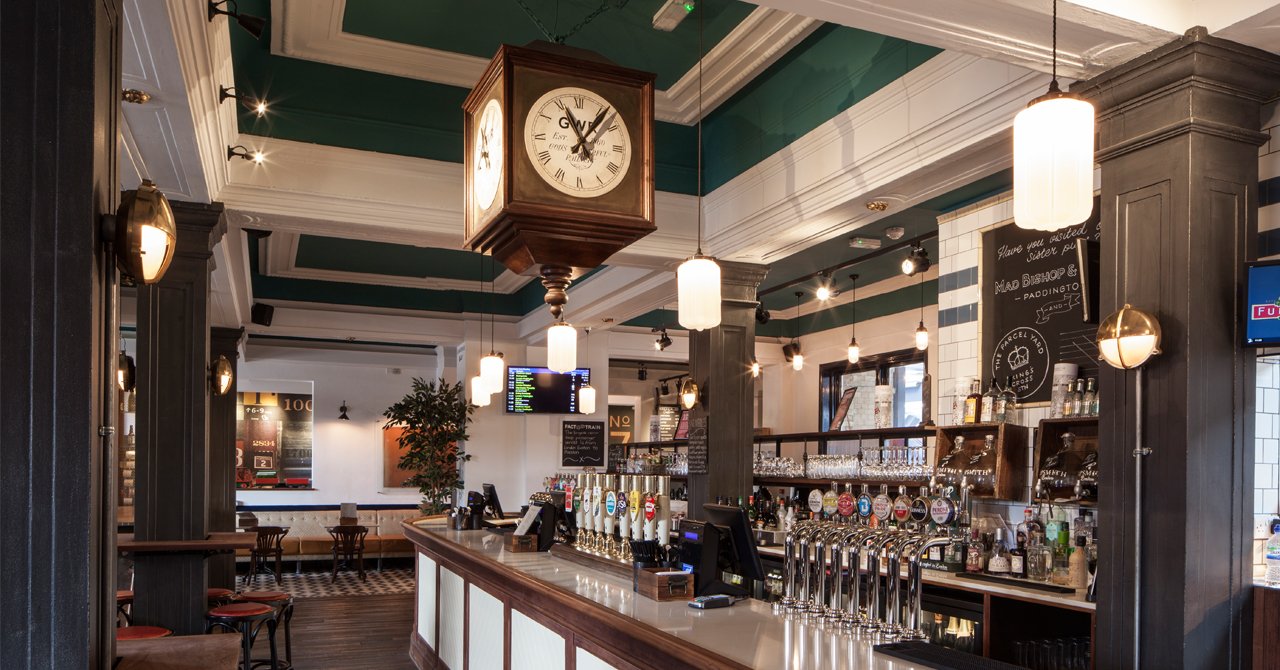
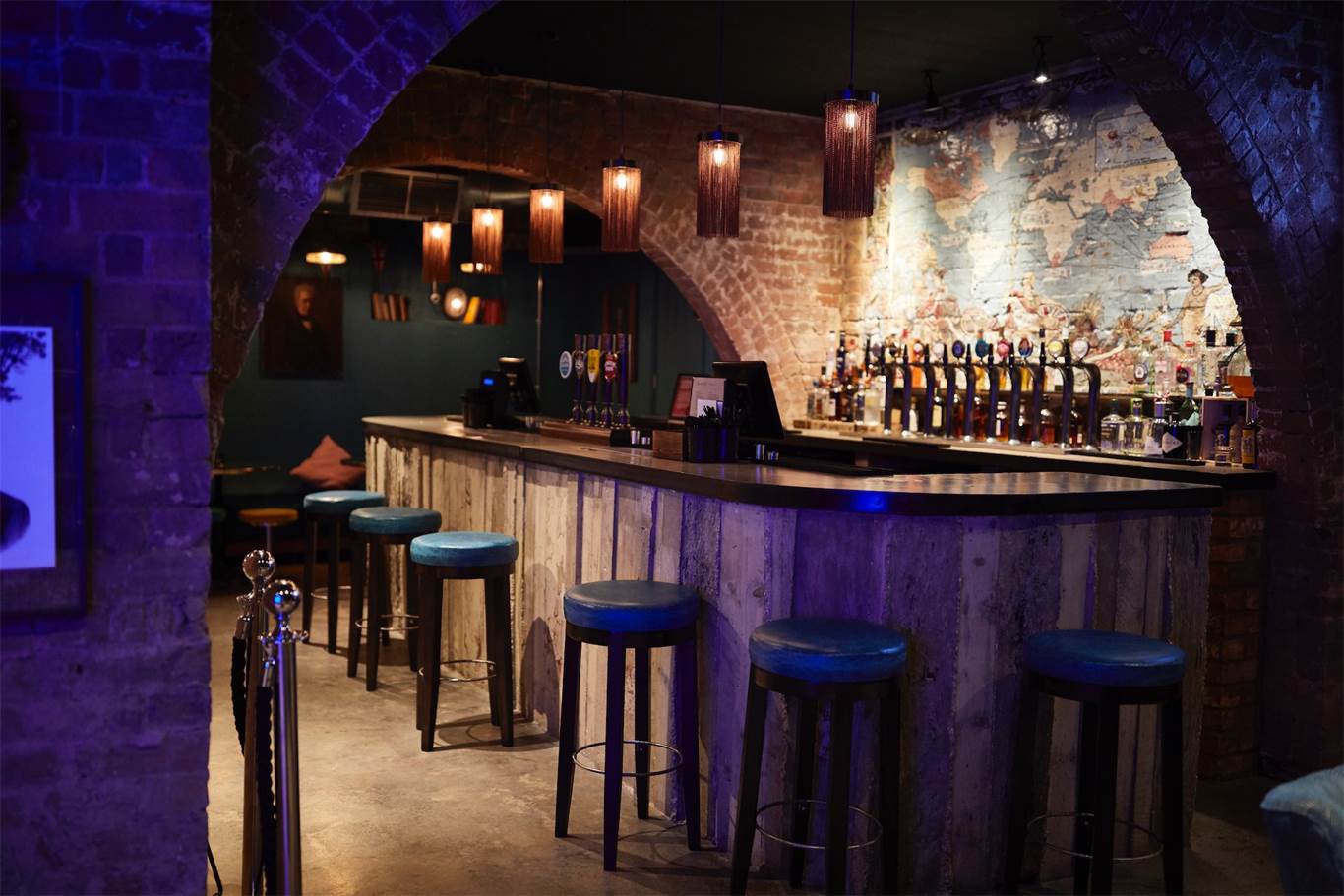
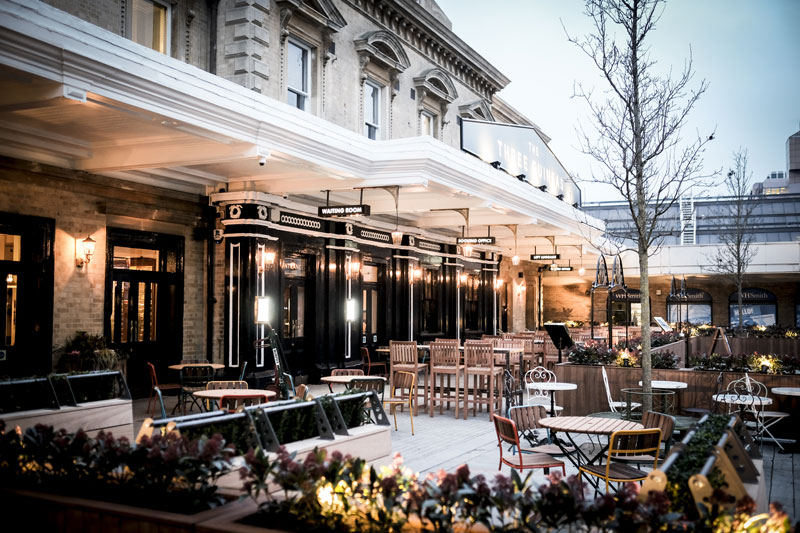
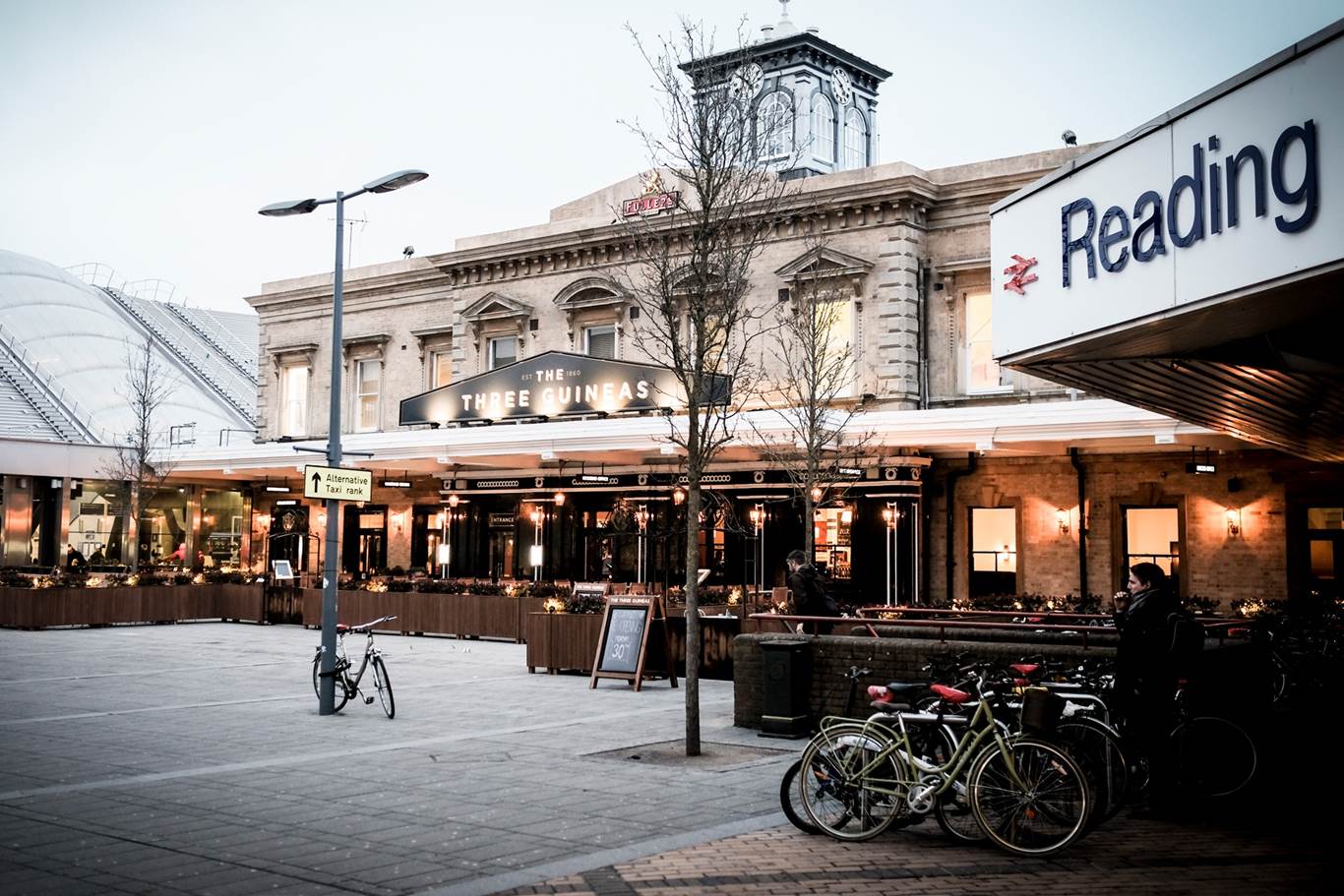
Since many of those who come Reading arrive by train, the station seems a good place to start the tour. Chronologically and historically speaking, this is not the most logical place to start, but this is not a history book. So let’s sit down in the Three Guineas, the station pub, grab a beer or have some lunch, and think about where we are.
Transport has played a massive part in Reading’s past. It sprang up near the confluence of the rivers Kennet, which is really the town’s river, and the Thames. In fact, the Romans built a wharf on the banks of the Kennet, near the area occupied by the prison and abbey, to load goods arriving from London via the Thames on their way to Silchester, a dozen or so miles to the south-west. The main road from London to the west country, to Bath and Bristol, now the A4, passed by and later the Kennet and Avon Canal was built. Both of these brought visitors to the town, facilitated trade and ensured Reading’s prosperity. However, it was the coming of the railway that had the greatest impact.
Reading was already a prosperous market and trading town before the railway came. There were many who had doubts about having a railway here at all. That it did come was part of the dream of one of Britain’s greatest engineers, Isambard Kingdom Brunel. He had a vision of being able to travel from London to New York by the revolutionary new means of propulsion – steam. He built great steam powered ocean liners, such as the SS Great Western in 1836, the largest ship in the world, to cover the Atlantic part of the journey from Bristol. But to get from London, he needed a railway and so the idea of the Great Western Railway was born.
Planning began in the early 1830s and the first track, between London and Maidenhead, opened in 1836. It was not until 1840 that it reached Reading and its impact was phenomenal. Before then, taking goods up to London could take anything up to a day, whilst passengers travelling on the expensive stage coach could do it in four hours. Using super-fast locomotives like “Fire Fly”, designed by the GWR’s brilliant engineer, Daniel Gooch, passengers could travel at over 30 mph. Journey times were cut by a quarter. Of course, the train meant the death of the stage coach and canal, but that’s the price of progress. Reading was a town of the future. Whole new markets opened up for its goods and George Palmer could send his biscuits all over the world.
The pub you’re sitting in was not the town’s only station, as soon after the GWR opened Reading had a Southern Railway link to London Waterloo. This terminal stood roughly where the ticket office and shopping concourse now stand. It was demolished in 1969 and the two stations were combined.
The Three Guineas is not in the original Brunel station built in 1840. This was demolished and was replaced by the current structure of Bath stone in 1860. It was in use as a station into the 1980s and the main entrance to the pub gave way to a corridor on the right of which were the ticket offices and which followed through onto what is now platform 7. It’s hard to imagine that the space that is now a drinking and eating area once housed the entire station operations, but it did.
By the 1970s it was clear that the station, one of busiest in the country, needed expansion. The Queen opened the present ticket office and concourse in 1989 and the old building ceased its railway functions. The interior was redesigned and it became a pub. At first it, too, opened onto the platforms, but this was later closed. However, even this expansion was not enough as the volume of rail traffic continued to expand. Reading became a rail bottleneck, with trains often having to wait to gain access to the station, and in 2009 work began on a £400 million redevelopment into the modern station. It remains the busiest station outside London. In late 2016, the pub’s interior was also redesigned by Fullers, its current owner, and reopened in January 2017.
PART TWO – THE OLD MARKET

Having enjoyed a pint in the Guineas, it’s time to move on. Step out into the square in front of the pub, past the statue of King George V and move up Station Road. For some more up-market refreshment, wander into the Hotel Malmaison on the corner. This wonderfully ornate Italianate-style building is unique in Britain and maybe the world. It was built in 1844 as the station’s hotel and may have been designed by Brunel himself, though this cannot be accurately verified. That it is still used as a hotel makes it the oldest surviving railway hotel in Britain, if not the world.
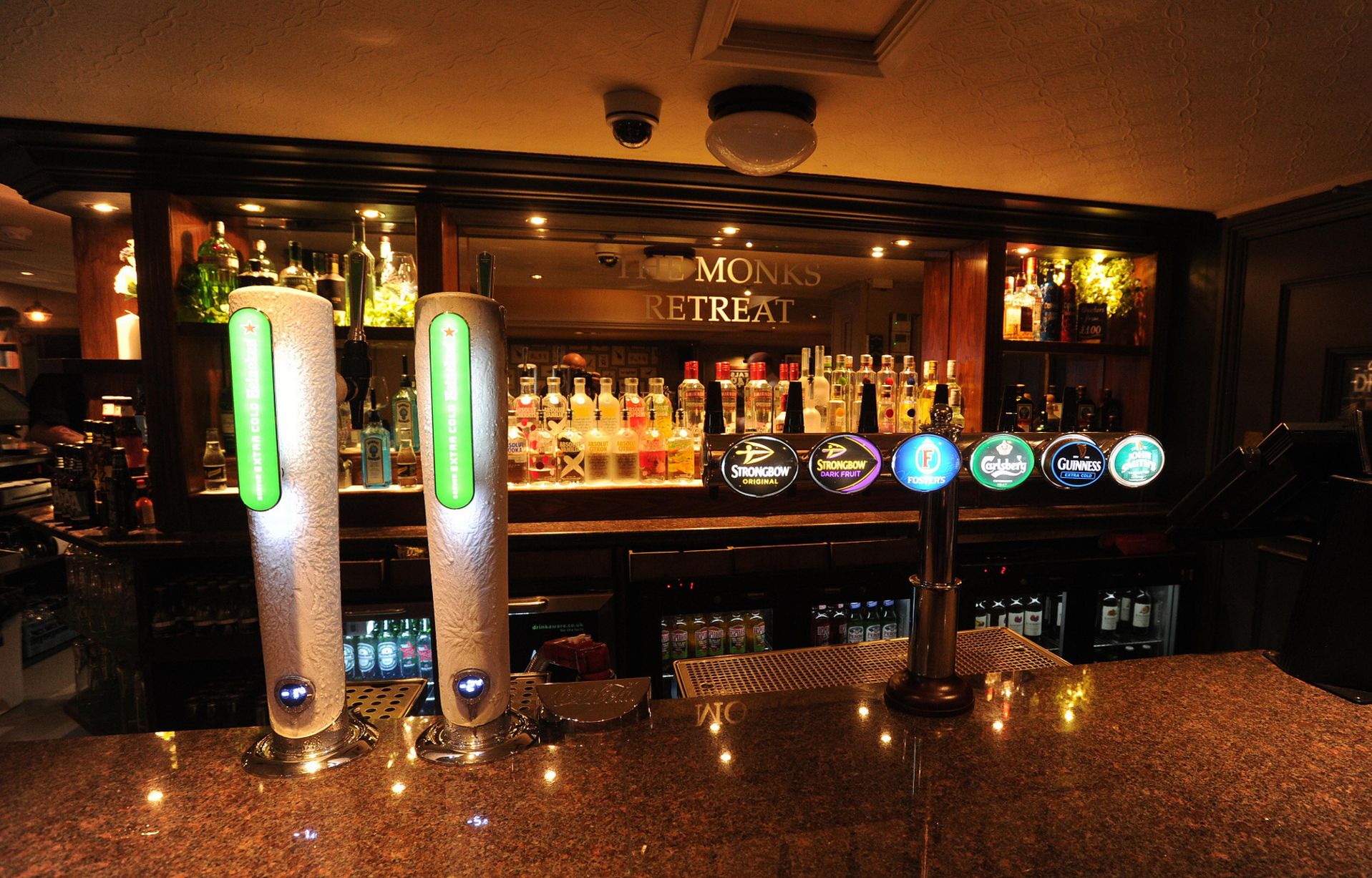
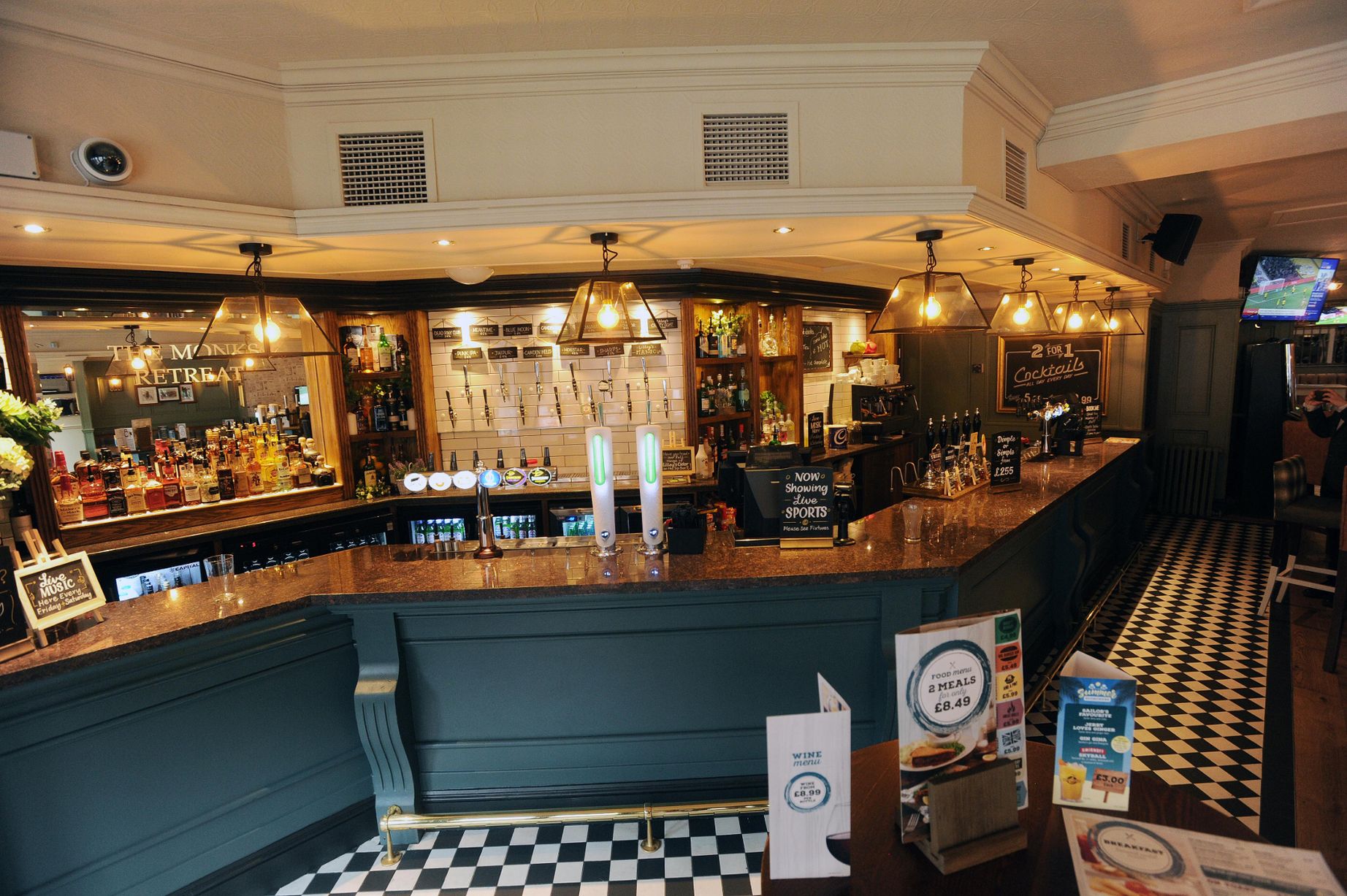
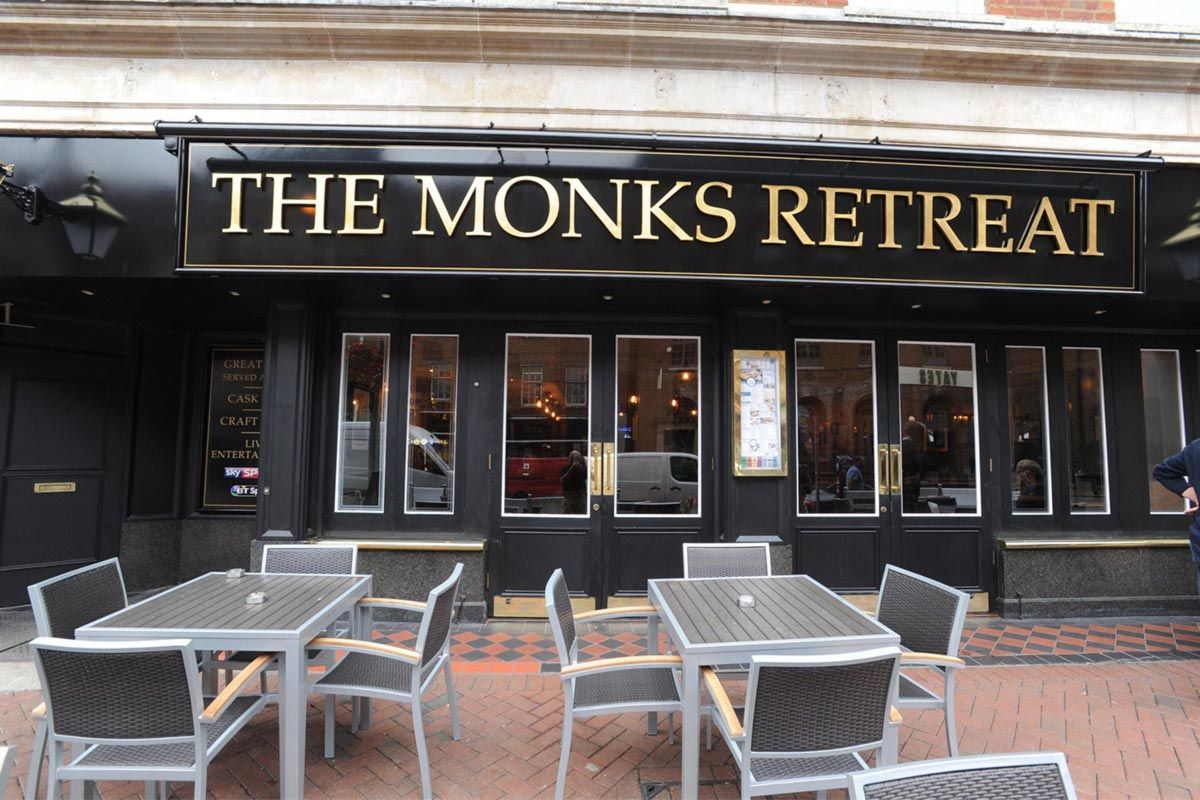
Move along the street a few yards and make your way to the Monks Retreat. The building itself is not particularly interesting, one of a series in the area that date from the early 20th century, but there’s some noteworthy features to see as you sip your pint. Across the street and to the left are some 18th century town houses, the façade of one being the entrance to the Harris Arcade, opened as a shopping mall in the 1930s and containing some interesting shops. To its immediate right is a shop that used to be Sally’s Café and was a fashionable haunt for the young beaus of 1960s Reading because it was managed by the mother of Marianne Faithful. That doughty dame had a fearsome reputation, but her daughter ensured that among its famed patrons were the Rolling Stones and other pop celebrities.
In the square, to the right, stands the statue of Queen Victoria, which was erected in 1887 to mark her golden jubilee. It was designed by George Blackall Simmonds, one of Reading’s finest sculptors and a director of its brewery. Local people like to tell you that she’s got her back to the town because she developed a dislike of the place, having been badly received by its people, but it’s just a town myth. She may never have visited Reading.
To the queen’s right is St Lawrence’s church, one of three original parish churches in the town centre. Originally a Norman building, it went through refurbishments and rebuilds in 1196, 1458 and 1967. Today, it no longer functions as a parish church and its opening times are limited, but it contains the grave of John Blagrave, a celebrated mathematician of his day and local landowner, who died in 1611. Inside is the font which was used to christen William Laud in 1573, another of Reading’s dignitaries who went on to become Archbishop of Canterbury and then had his head cut off in 1645 for being on the wrong side in the Civil War.
Next door to the church is the Georgian building that now houses the offices of the legal company Blandy and Blandy. Although it underwent refurbishment in the 1870s, it is best known for having suffered severe damage when one of the four German bombs dropped on Reading in February 1943 fell here. On the wall there’s a memorial plaque to the 41 people who died in that raid.
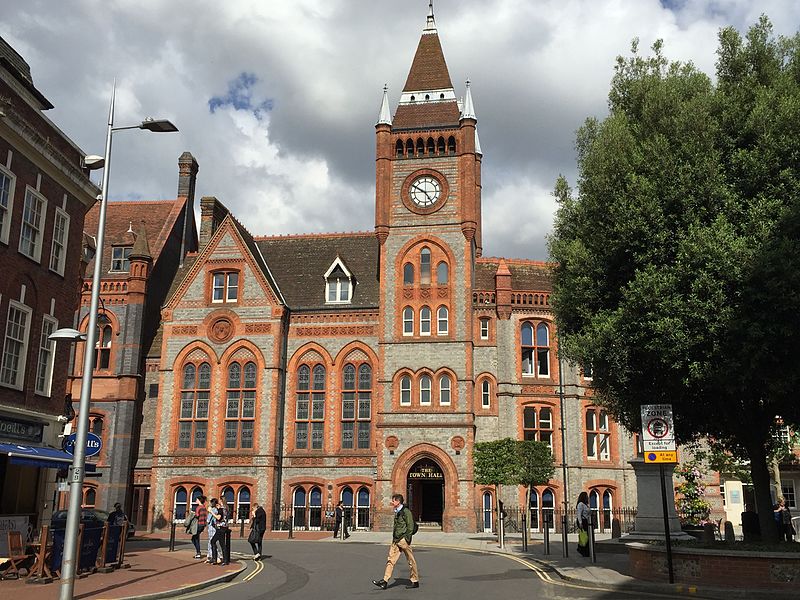
Next door again is Reading’s magnificent town hall, now its museum. This structure was originally built in 1786, but a major rework took place in the 1870s which gave it its current Gothic revival look. Designed by Alfred Waterhouse and using local bricks, it’s got to have some of the finest brickwork you’ll ever see. Put down your pint and go and have a look and whilst you’re away from the pub follow Friar Street around to the right and into what was the original town market. The market’s no longer here, but in the middle is an usual structure designed by the famous London architect, Sir John Soane. It was commissioned in 1804 by another Reading bigwig, Edward Simeon, a wealthy director of the Bank of England, doing it, he said, to bring light to the market. His brother was trying to get elected to parliament around that time, so there may have been another motive for the gift to the town.
PART THREE – THE FORBURY
It’s time to move on again. Take the little alley way between St Lawrence’s and the legal offices. It opens out into the church yard and on the left, as you walk through, you’ll see the remains of the Hospitium of St John. This was once part of the abbey complex and provided accommodation for the thousands of pilgrims who, in medieval times, flocked to visit the abbey and its famed collection of holy relics. In those more pious times, it was widely believed that pilgrimage and the intercession of saints, through veneration of their relics, could bring earthly benefit, such as cures for ailments, or a quicker passage through purgatory in the afterlife.
Towards the end of the church yard, on the right, is a memorial to one of Reading’s more forgotten sons, the unfortunate Henry West. He was a 24-year-old labourer helping to build Brunel’s earliest version of the station. Working on the roof at the end of March 1840, he was the victim of a freak blast of wind, a tornado or whirlwind, that took him aloft and deposited his lifeless body 200 feet away. There’s a memorial plaque to him, put up by his friends, on platform 7 of the station, but most people pas it by unnoticed.
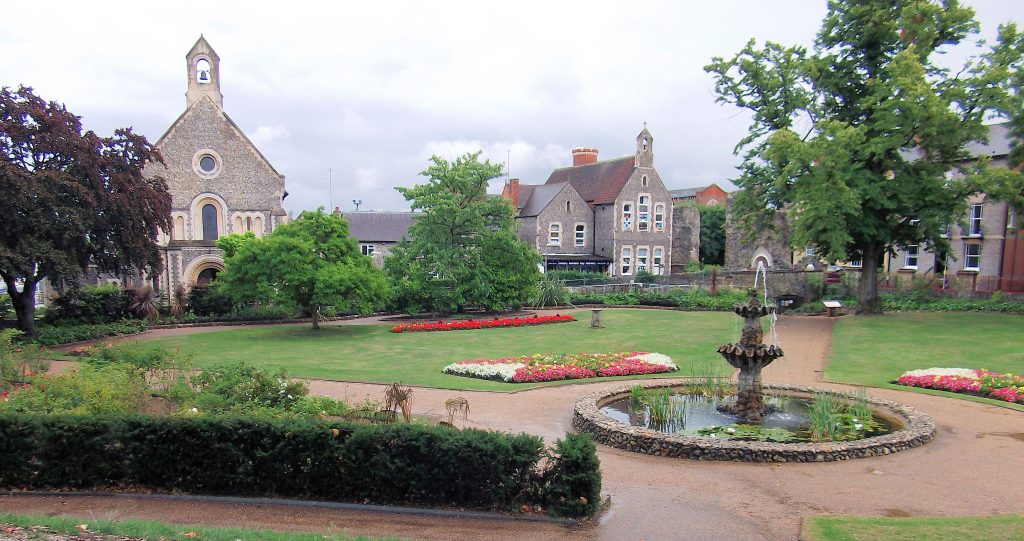
Cross the road and enter the Forbury Gardens, where you’ll find much of interest. Forbury is an unusual name, but it simply means “before the town”, as Reading’s old town was laid out behind, or to the south of it. It was once also part of the abbey complex and had various uses before the council bought the land in 1854 and turned it into a garden, opened in 1859, for use of the public. It’s a popular spot, particularly in summer, when the Victorian-style gardens bloom with flowers and bands play at the weekends.
For those of a botanical bent, the gardens contain some unusual trees. There’s the Verdun Oak, which was grown from acorns collected at the site of World War One’s Battle of Verdun in 1916 and planted here as a reminder of the horrors of that battle. There are a couple of Handkerchief trees, which produce large white leaves in spring and there’s a Maidenhair tree with its fan-shaped leaves.
Almost certainly, the first thing that will catch the eye is the impressive Maiwand Lion, designed by the same George Blackall Simmonds, who sculpted Queen Victoria’s statue, and erected in 1886. It commemorates the 329 members of the Berkshire Regiment killed at the Battle of Maiwand in July 1880 in the second Afghan War.
The hill at the far end of the garden is artificial and was put there in 1150. Its purpose was to defend the abbey from attack during the civil war between the forces of King Stephen and his cousin and rival for the throne, the Empress Matilda, both grandchildren of William the Conqueror. (She was the daughter of King Henry I who founded Reading Abbey.) Eventually, they came to a deal whereby Stephen could keep the throne, but, on his death, it would pass to Matilda’s son, who reigned as Henry II.
In the later civil war between the Royalists (Cavaliers) of King Charles I and the Parliamentarians (Roundheads), the hill was once again fortified. Guns were placed there by the town’s royalist garrison to defend it during the siege of Reading of 1642 -43. They were unsuccessful and the garrison fell to the Earl of Essex, commanding the Parliamentary forces. Reading remained in Parliament’s hands for the rest of the war.
Stepping out of the gardens by the gate near the small café, you’ll come across the abbey gate house. Along with the Hospitium, it’s the only other of the abbey’s buildings to have survived its dissolution by King Henry VIII. It was in front of these gates that the last abbot, and former friend of the king, Hugh Cook Farringdon and two others were hanged, drawn and quartered for treason in 1539. The gate house was later used as a school for girls, its most famous pupil being Jane Austen.
Nearby is the memorial to Trooper Potts, Reading’s famed winner of the Victoria Cross. Frederick Potts saw service during the Gallipoli Campaign and was wounded during the Battle of Scimitar Hill in October 1915. He lay in the open, sheltering from cross-fire, for 3 days without food, water or help. Not only did he manage to crawl back to the relative safety of his own trenches, he also saved another wounded colleague, another Reading boy called Arthur Andrews, by using his trenching shovel to drag him back.
PART FOUR – THE ABBEY
One of the more frustrating things about Reading is that it often hides its public works of art and nearby are two of its more original and interesting. Coming out of the Forbury Gardens and looking at the abbey gate house, turn left and walk towards the abbey ruins, past a large modern building called Abbots House. After a few steps, you’ll come to a small alley way coming off to the right and before you reach a terrace of brick town houses. Turn into the alley and a few steps more will bring you into a small enclosed garden. On the abbey side of the lawn is a mournful looking figure. It’s called “Robed Figure” and was created by Dame Elizabeth Frink in 1988.
At the right-hand corner of the garden, opposite the statue, descend the stairs into another garden, next to a large modern office block called Abbey Gardens. You are now on Chestnut Walk, where the abbey, the prison and an arm of the Kennet and Avon Canal all meet. In the middle of the lawn to your left is another intriguing sculpture, by the Danish artist Jens-Flemming Sørensen, entitled “Ball Heads”.
We’ll take a slight detour here, moving right either round or under the Abbey Gardens building. The road you’ll meet is Abbey Street and before you is one of Reading’s more recent architectural additions, the Blade. Move around to its left, along a small walkway next to the Holy Brook, and you’ll find the only remaining part of the abbey’s former mill. Following the dissolution of the abbey in 1539, the mill was kept in use and was milling flour into the mid-19th century, by which time it was doing so for Huntley and Palmer.
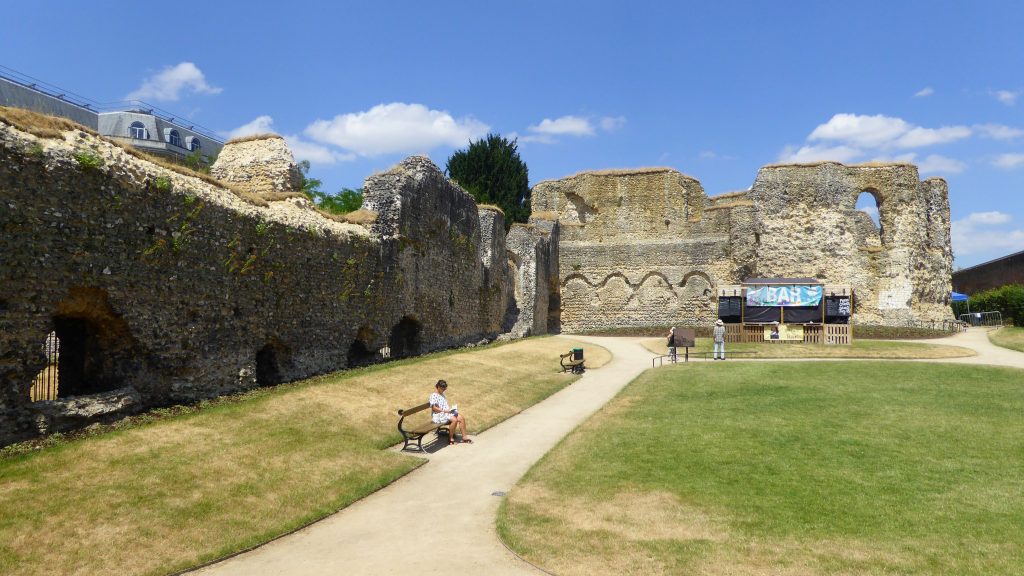
Retrace your steps back onto Chestnut Walk and there you’ll find the abbey ruins. Before the founding of Reading Abbey by King Henry I in 1121, Reading was a small, rural backwater of little importance. It has a Saxon place name and was settled in the 8th century. It was the abbey and its collection of holy relics that made it prosperous.
Henry I was a younger son of William the Conqueror and the third of the Norman kings. He seized the crown following the death of his brother, William II or Rufus, who was killed in a hunting accident in the New Forest in 1100, despite having another elder brother with a better claim than he had. In 1120 Henry and his only son, William, had been visiting Normandy and in November were preparing to return to England from Barfleur. Henry was the first to set off, leaving his son to follow on behind in the White Ship. Young William, though, was having a high time of it, drinking far too much wine with his mates. When his ship eventually disembarked, they were all blind drunk. William ordered that his ship try to catch up that of his father, but they struck a rock outside the harbour and all bar two people were drowned.
Henry was naturally distraught on hearing of his son’s demise. He had only one other child, a daughter called Matilda, who was married to the Holy Roman Emperor, Henry V and was away living in Germany. Thinking that the disaster might be God’s punishment for his sins, King Henry decided to seek forgiveness by founding an abbey and chose Reading as its site. He was buried here following his death in 1135. His abbey grew to become one of the most important in the country. It acquired many holy relics, including the hand of St James, brought to England by Matilda when she returned following her husband’s death. The collection grew and among the treasures were Jesus’s foreskin, part of his shoe, St Luke’s tooth, some of St Mary’s hair and the bones of many saints, including St Pancras, Mary Magdalen and St Anne.
Pilgrimage was massive in the Middle Ages, as sinners of all sorts, sought the help of the saints to get them into heaven. With such an epic array of relics, Reading became a major attraction. These visitors brought money and the town grew rich. So, it can be fairly said that Reading’s medieval wealth was the result of a booze-up on a boat in France.
The abbey was dissolved in 1539, part of Henry VIII’s programme of closing all England’s monasteries and grabbing their enormous wealth for himself in the process. St James’s hand was later discovered buried in a chest when workmen were digging the foundations for Reading Gaol. It’s now in St Peter’s Church in Marlow.
Move a little along Chestnut Walk, along the part named the Oscar Wilde Memorial Walk and you’ll find yourself under the forbidding walls of the gaol itself. This bleak institution was opened in 1844 and was designed on the panopticon model, with wings radiating from a central point from where all aspects of prison life could be seen and controlled. It employed the “Separate System” which prevented any contact between the prisoners. They were confined to their cells 23 hours a day and, when they were given an hour of exercise, they were masked so they couldn’t see each other. It was assumed that this would prevent them from contaminating each other with further wicked vices, and so they would be reformed.
The gaol’s most celebrated inmate was Oscar Wilde, who arrived in 1895. He was released in 1897, but was so scared by his experiences that he moved to Paris, where he died in 1900. He wrote the “Ballad of Reading Gaol” a year later, in 1898. The other famous inmate was the American actor, Stacey Keach, who did six months here in 1984. Wilde had been convicted of indecency, Keach for possession of cocaine.
PART FIVE – THE CANAL
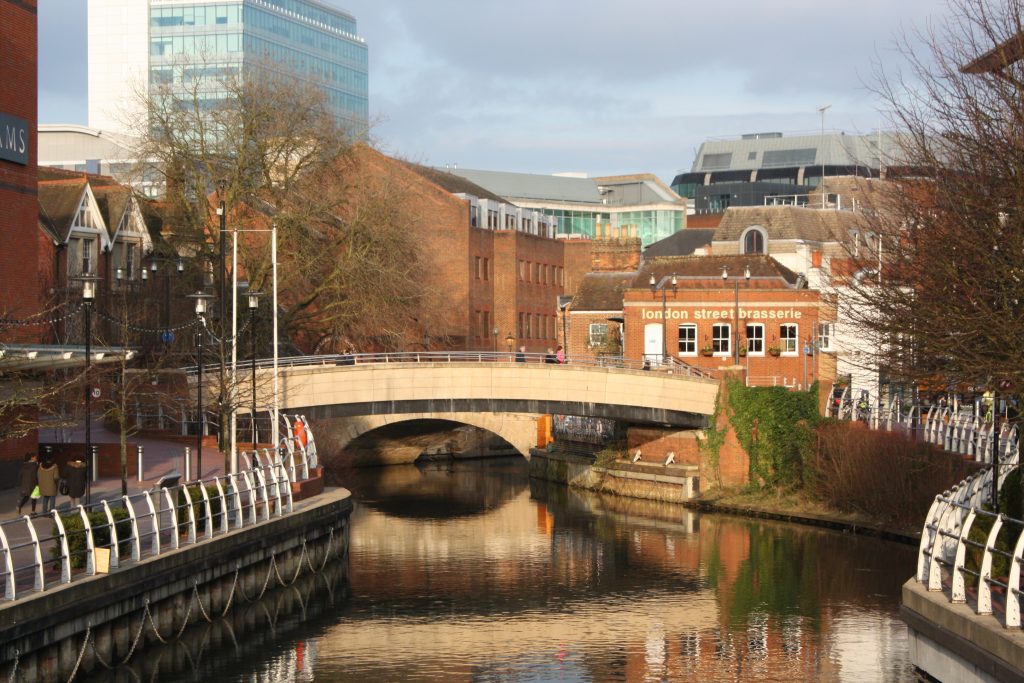
The part of the canal you’re by is only a spur. To reach the main channel, turn right off Chestnut Walk onto the dual carriageway road and go down to the traffic lights. Cross here and carry on up the Kings Road until you come to a small bridge across the canal. On the other side of the bridge, go down the steps and onto the tow path.
On the way you’ll pass the large, modern Prudential building, but of greater significance is the small Huntley and Palmers building next to it across Gas Works Road. It’s all that remains of the great Biscuit company that was once the town’s largest employers and helped give Reading its nickname of the “Three Bs” – stands for biscuits, beer (Simmonds, later Courage brewery) and bulbs (Suttons Seeds). The company was founded by Joseph Huntley in 1822, but expanded to become the largest biscuit factory in the world under his son, Thomas and George Palmer, who became his partner in 1846. At its height, it covered a site of several acres on the north bank of the canal and employed 5,000 people. It ceased production in 1976.
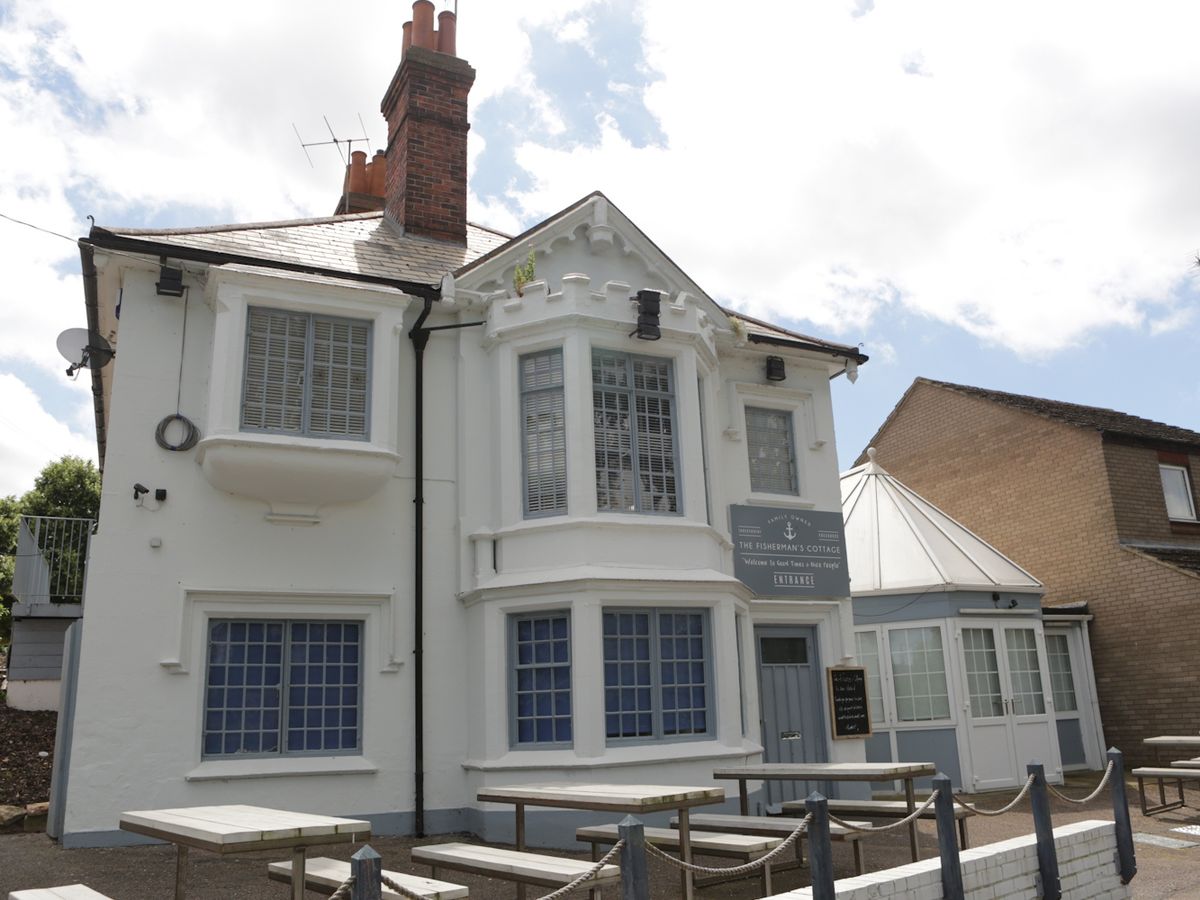
As you walk along the towpath, let’s stop for refreshment in the Fisherman’s Cottage and think about the canal. Before the railway came, the Kennet and Avon Canal was one of Reading’s main transport arteries, enabling goods to be moved between London and Bristol and bringing much trade to the town. It carried out Reading’s products and brought in things like Bath stone, out of which several of its building were made, including the station.
What is now referred to as the canal is, in fact, three separate navigations that were linked together. The River Avon links Bristol to Bath and the River Kennet links Newbury to Reading, where it joins the Thames. Both were made navigable in the 18th century. The canal, linking Bath to Newbury, was built between 1794 and 1810 and prospered for a while until the railway killed it. It fell into gradual disrepair until, by the 1950s only a short stretch in Newbury was still open. That it was not shut completely was because of two Newbury traders. They carried salt from one part of town to another, so claiming that the canal still had a commercial use. Having been saved, it was gradually restored, mostly by volunteers. It was fully reopened for use in 1990.
As you move further down the tow path, you’ll pass Blake’s Lock, the final lock before the Kennet enters the Thames. Behind it is a small, two-part museum, which can be reached by going along Gas Works Road from the Prudential building passed earlier. One part contains the town’s pumping station and the other a Reading-built gypsy caravan of the early 20th century, with an exhibition about gypsy life and other aspects of Reading’s history.
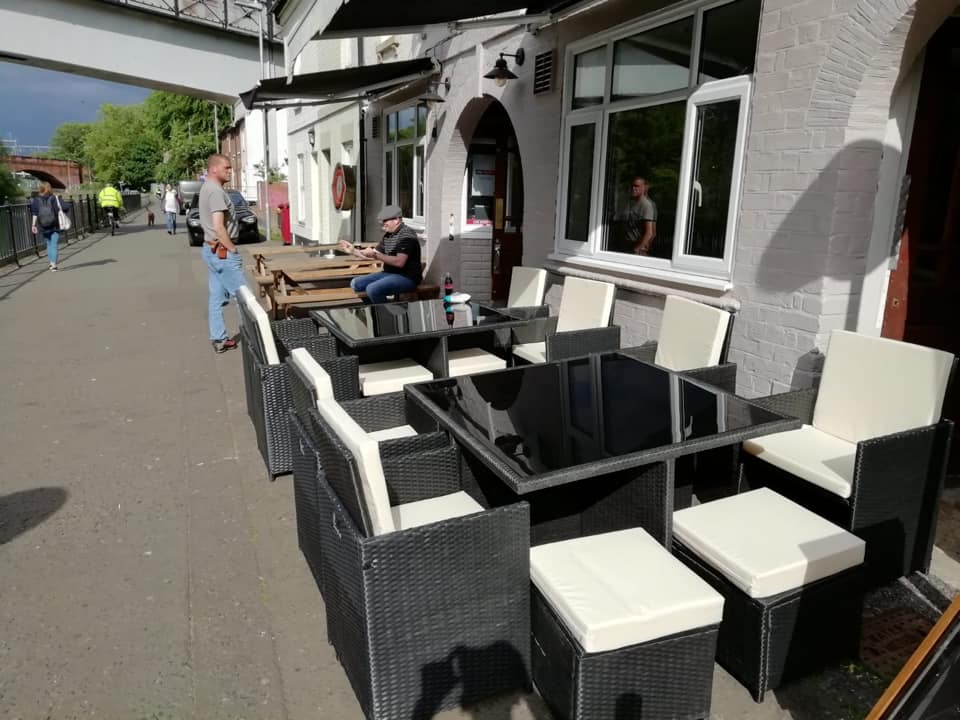
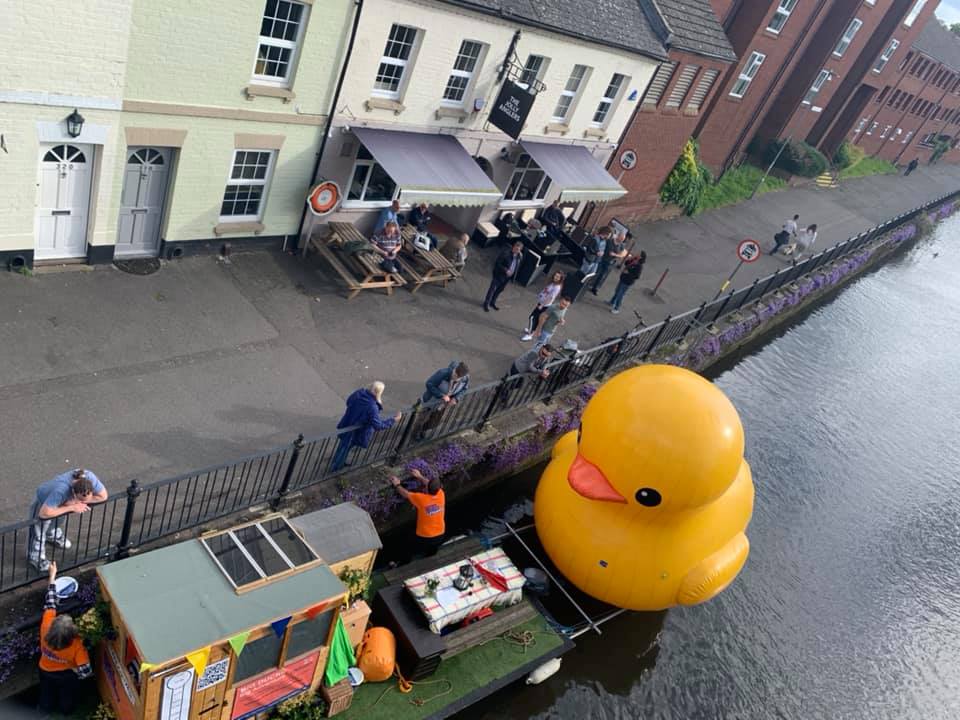
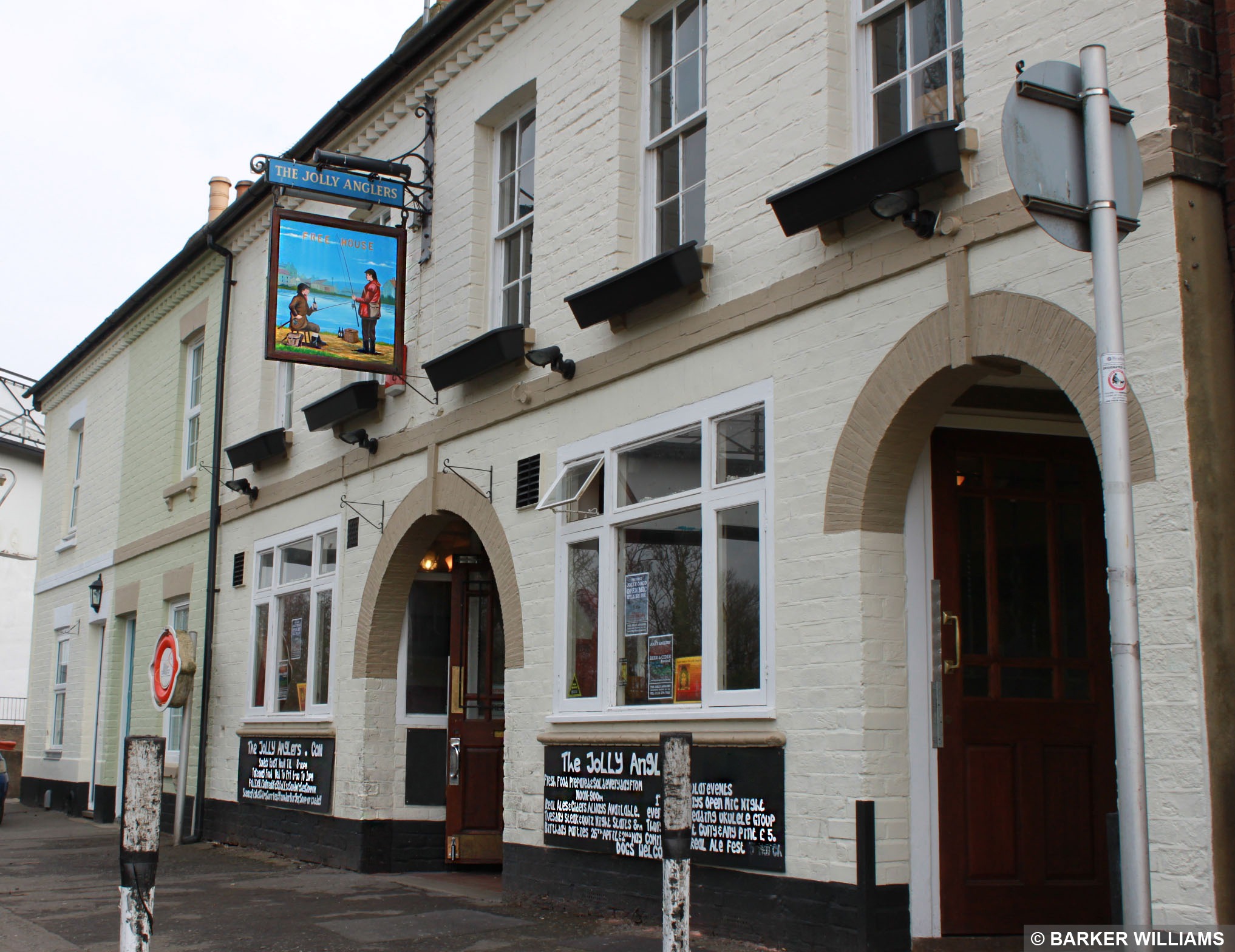
Just past the Lock is the Jolly Anglers, another place to stop, have a pint and think about an incident in Reading’s history that happened nearly 1200 years ago.